A Simulation That Makes Flow Visible
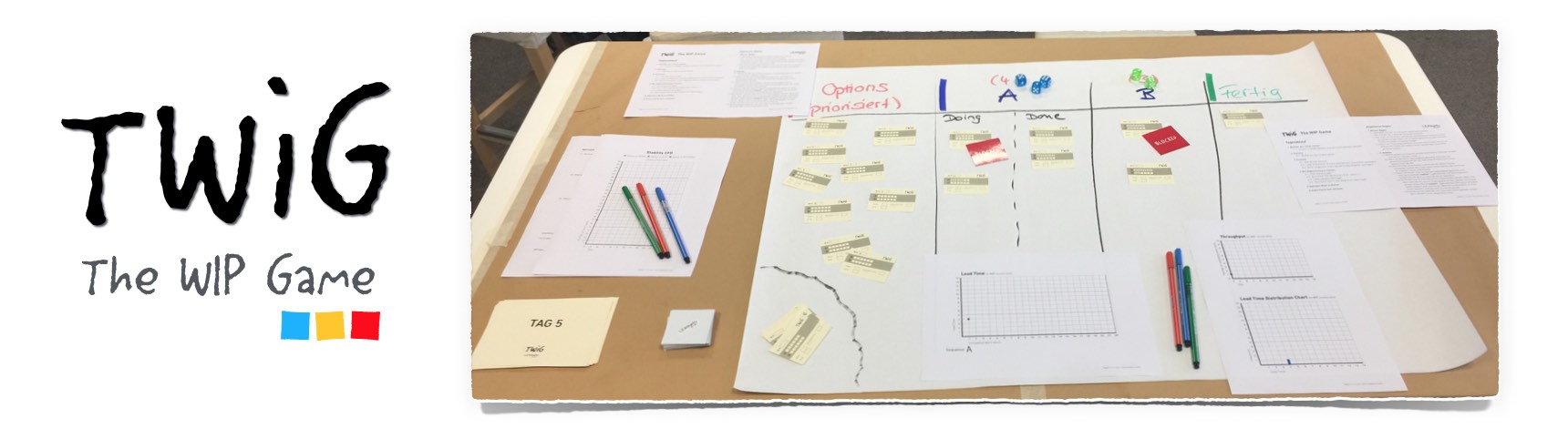
“TWiG - The WiP Game” lets people experience what happens in WIP-limited pull systems: work piles up, priorities compete, lead times change, and local optimization is not enough. Instead of only explaining flow, TWiG lets people feel system behavior in a short, practical simulation.
A game run takes around 90 minutes including explanation and debriefing. That makes TWiG especially useful for trainings, workshops, and communities where Kanban, flow, WIP limits, and metrics should not only be understood in theory, but discussed through shared experience.
Why TWiG Still Matters
Flow becomes playable.
TWiG turns abstract concepts such as WIP, pull, lead time, and blockers into a shared experience.
Training material with reach.
The simulation is used in trainings and communities and is available in several languages.
A practical route into work systems.
TWiG shows Klaus' way of making complex system dynamics graspable: try it, observe it, improve it.
When TWiG Fits
TWiG is especially useful when people already have a basic understanding of flow-based systems and should experience what WIP limits, pull principles, and metrics mean in everyday work. The simulation fits well at the end of a training, as an entry point into a metrics discussion, or as a shared experience for teams that want to talk about flow.
TWiG is inspired by the simplicity of Featureban and the event-driven game dynamics of getKanban.
Download Materials
You always need two downloads: the core file and one language pack. The core file contains the shared materials; the language pack adds the language you want to use.
Core File
Language Packs
From Game to Work System
TWiG makes flow tangible at a small scale. Klaus’ current focus is helping organizations design work systems across teams, levels, and value streams: not optimizing individual teams in isolation, but improving collaboration across the whole system.