
One of life’s most revealing philosophies is to embrace the journey rather than the destination. The same is true in the context of pursuing improvement in problem solving for corporations of all sizes. Any company who wishes to learn, grow and improve, never really stops doing so. In their quest for perfection, they simply acknowledge that the most sought after quality is the perspective of staying on a path of continuous improvement. That is where real success lies. It is this constant journey of working to make more progressive changes and getting better at doing so as time lapses where they find their greatest success stories in achievement.
Making the system work for you
An important element in solving problems is to design a tailored kanban system within your organization that works for you. Here is an easy 3 step process that allows any organization to get started.
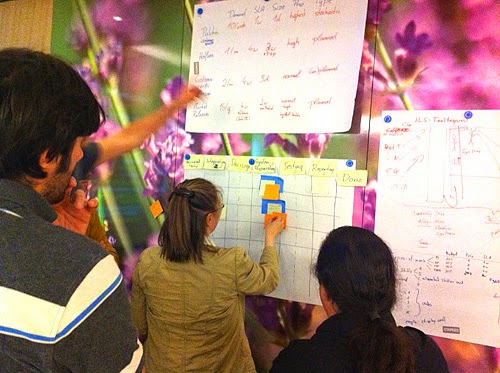
**Step 1: Form a system design team.****You achieve best results if you involve as many people as possible in the system design. However, if let’s say, 200 people are working in your system, you need a quite big room to run your system design workshop. And I also doubt that 200 people working on a system design is very efficient. A system design team has been proven to work quite well in such situations. The easiest way is to work with delegates from teams that are involved in the final kanban system. That’s actually how I lead most of my Flight Level 3 system design workshops.
Step 2: Design your system.****Remember, you do not design a kanban system for the sake of designing a kanban system. You want to work towards dissatisfactions of your stakeholders. Therefore, it is important that you focus on solving the specific dissatisfactions, which you discovered during your stakeholder interviews (see “Identifying stakeholders and their dissatisfactions”). By narrowing your focus to problem resolution, you are targeting the specific needs and desires of your stakeholders who want to know you can fix the problems they are facing. It is also important to show them you share their interests and concerns.
It is not a time to go deep in solving problems in coming up with process revolutions. It is more important that everyone is truly involved in setting up your future improvement environment aka “the kanban board” and addressing some of dissatisfaction in a first step. And it is really important that the system design team is doing the improvement work on their own because that’s the core when I say “improvement starts with the change process”. Don’t walk into the trap and tell people what to do! Help them figure out on their own. The coach is definitely NOT the smartest person in the room when it comes to a system design 😉
Step 3: Start your system. ** Once your system is designed, it is time to present it to your stakeholders and ask for feedback. If you solicited the advice of stakeholders in the beginning of the process, then this should be easy to gain their support. However, be open to more feedback as the process evolves and you receive more input. A good system is achieved when it addresses very specific dissatisfactions which have been identified, one after the other, in a sequential or prioritized fashion. Because the journey is never quite complete, you will stay in the continuous improvement loop…
The comment function is currently not available. Send us your comment via the Contact form.