
** I currently notice a significant accumulation of so-called Lean initiatives that are being rolled out on a large scale in companies by major consulting houses. Four of my clients are currently affected at the same time by these Lean waves and I will try to put my observations into words. The examples and figures used are of course fictitious and any similarity to real-life situation is, of course, pure coincidence.
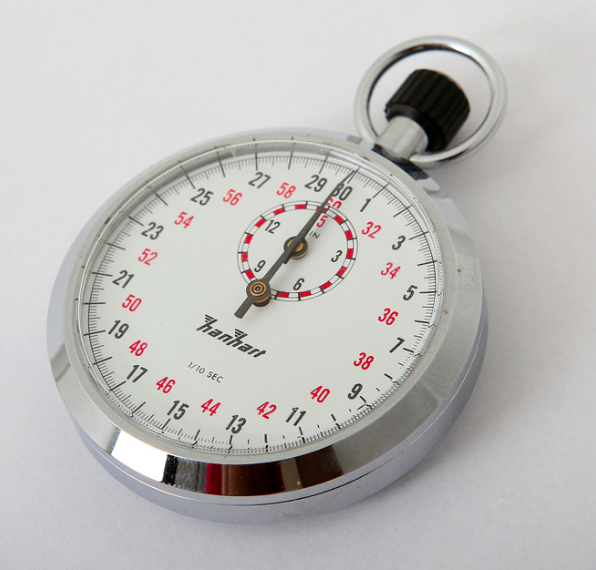
So the Lean initiative – what is this meant to achieve? This is easily explained: Increased efficiency. How can you imagine this? Well, in an initial step it is analyzed where greater efficiency could be created. This is quite simple: A horde of consultants is driven through the company, with the mission of “shadowing” staff with a stopwatch and to find out where time can be saved. The resulting improvement measures are for a person who thinks in systems – shall we say – rather surprising:
-
The printer should be located closer to the staff.
-
Office supplies should be available in the team rooms.
-
It must be determined who may speak to whom and when.
-
The meeting rooms should not be closed off.
-
etc.
Millions saved by moving the printer
Let’s take a closer look at printing optimization: Our stopwatch consultants have discovered that the employees take on average 75 seconds to fetch a printout from the printer. On average, each employee goes to the printer twice a day – so that makes 150 seconds per employee per day for spent on fetching copies. With 10,000 employees, that amounts to some 1.5 million seconds or 25,000 minutes or 417 hours every day. In a calculated mixed hourly rate of € 85 per employee, the transaction costs of printing jobs amount to approximately € 35,000 per day or € 175,000 per week or € 9 million per year. That’s a lot of money – only for the employees to fetch their printouts from the printer. This has revealed, of course, an immense potential for savings!
So it’s clear what needs to be done: The printers have to be better located to reduce the time to fetch the printouts. This can save millions! If the printer would be placed, for example, directly in the team rooms, one could halve the time it takes to pick up a printout. Cut in half! Yes! This means the company saves a pretty sum of 4.5 million Euros per year with this simple step. Amazing!
When you combine a few of these brilliant improvement steps in a so-called Lean initiative you will quite quickly reach a potential savings of 20 million Euros, for example. Not quite – the consulting company would, of course like 5 million of this – after all, you need a lot of manpower to streamline the company’s work to such an extent. But you can have this with pleasure! For there is still a saving of 15 million Euro. Fantastic! We love Lean!
But what do we do with the 15 million Euros we have saved? Well, the average staff costs amount to € 100,000 Euros annually per employee – that is, we can dismiss 150 employees and still achieve the same performance. If we don’t want to let employees go, we could easily start more projects then. Great! And that works through simply moving the printer around a bit. Money really is practically growing on trees.
Knowledge work and the toilet
Unfortunately, this approach has a tiny flaw: It does not apply to knowledge work! People are not machines. How much real “performance enhancement” does a company achieve when software developers or engineers save 30 seconds per day when fetching something from the printer? I don’t mean the absurd sample calculation that gets better the more people you multiply into the calculation.
The supposed savings does not result in 30 seconds of more products being developed that the company can then sell at a profit.**** What are already 30 seconds of an 8-hour workday of a marketing specialist or a project manager? A typical day in knowledge work is full of unexpected events, which simply vaporises the ridiculous 30 printer seconds: an unplanned 10-minute phone, help a colleague for 15 minutes, repeatedly unforeseen troubleshooting after an integration test, unforeseen delay because a supplier has not delivered on time, a hypothesis has proven to be wrong and needs reworking, etc.
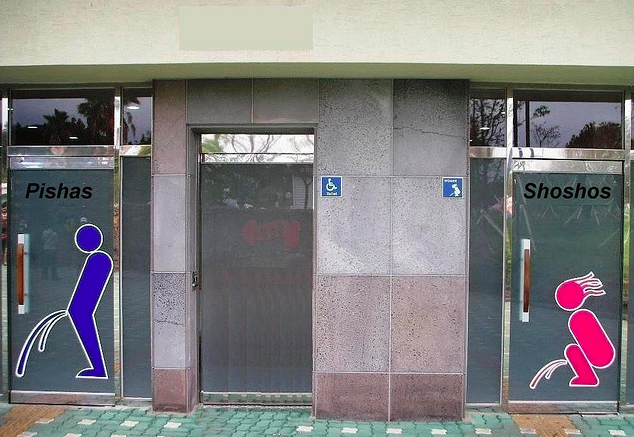
And then there was the spicy chili con carne from the day before, which caused even unplanned additional work of the digestive system, thereby increasing the daily toilet-time of an employee from the average 5 minutes to 10 minutes on that day. The few seconds saved in efficiency gains getting something from the printer is – with all due respect – shits.
Is there anything more than efficiency?
I have in principle nothing against efficiency gains through waste reduction. However, these are only in rare cases the real problem of companies. My experience says that companies have much bigger problems whose reduction brings an incomparably greater leverage over any ridiculous seconds waste optimization:
-
making blind decisions on the basis of invisible work; keyword visual management**
-
installing solutions without understanding the problem; keyword lazy management
-
unlimited work in the system; keyword stop starting, start finishing
-
permanent re-prioritizing of tasks due to unstable work systems; keyword pull instead of push
-
optimization of individual staff utilization over managing work flow; keyword manage work and not workers
-
unclear connection between strategic goals to employees’ daily work; keyword fit for purpose
This list is by no means complete and can be extended easily to include more serious problems. If some of these problems are present in a company – and the likelihood is damn high that this is also the case – efficiency programs are of no use at all. Quite the contrary – the situation deteriorates dramatically:
Staff is permanently busy while work is not getting finished, lead times are getting higher and higher while customer satisfaction is decreasing, and throughput (= money earned) is reducing because of induced overhead like permanent re-prioritization and constant status reporting.
And all this, although on paper one had calculated zillions in savings.
– Stopwatch photo by Tim Reckmann
– Toilet photo by Alex Guerrero
The comment function is currently not available. Send us your comment via the Contact form.